Bell Palsy
Mahahalagang Punto
- Ang Bell palsy ay biglaang peripheral facial-nerve (CN VII) dysfunction na nagdudulot ng unilateral facial weakness o paralysis.
- Karaniwang mabilis ang onset at madalas umuusad sa humigit-kumulang 48 hanggang 72 oras.
- Karamihan ng kaso ay self-limited na may malaking recovery sa loob ng ilang linggo hanggang buwan, ngunit maaaring may natitirang weakness.
- Kabilang sa priority care ang maagang symptom recognition, exclusion ng structural/vascular mimics, at eye-protection measures.
- Pinapabuti ng early steroid therapy (sa loob ng humigit-kumulang 72 oras), supportive care, at rehabilitation-focused exercises ang recovery potential.
Pathophysiology
Pinaniniwalaang may kinalaman ang Bell palsy sa inflammation at pamamaga ng facial nerve, na madalas inuugnay sa viral triggers gaya ng herpes simplex. Ang neural edema ay humahadlang sa motor signaling ng facial muscles at maaaring makaapekto rin sa taste, lacrimation, at sound sensitivity.
Dahil maaaring magmukhang central neurologic emergencies ang unilateral facial weakness, dapat munang maalis sa diagnostic evaluation ang ibang sanhi gaya ng stroke o brain tumor.
Classification
- Typical unilateral Bell palsy: One-sided facial weakness/paralysis na may peripheral CN VII pattern.
- Bilateral involvement (rare): Bilateral facial weakness presentations na nangangailangan ng mas malawak na differential workup.
- Recovery trajectory domain: Self-limited near-complete recovery kumpara sa persistent residual weakness.
Nursing Assessment
NCLEX Focus
Unahin ang mabilis na facial-neurologic assessment, eye-protection risk, at exclusion ng emergency mimics.
- Suriin ang onset timing at bilis ng paglala ng facial weakness, kabilang ang drooping mouth/eyelid at drooling.
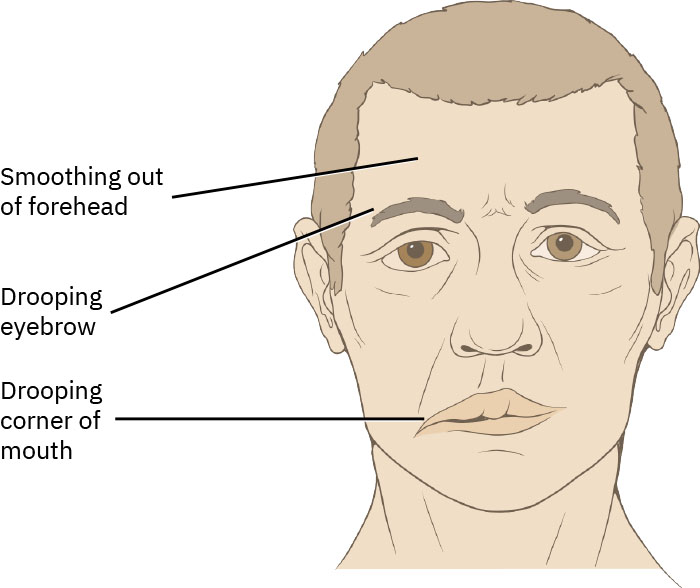 Reference ng ilustrasyon: OpenStax Clinical Nursing Skills Ch.22.1.
- Suriin ang kakayahang isara ang eyelid at ang corneal-exposure risk mula sa dry eye o labis na pagluha.
- I-screen ang mga kaugnay na sintomas: altered taste (anterior tongue), hyperacusis, facial/jaw/retroauricular pain, at speech-articulation changes.
- Suriin ang risk context kabilang ang pregnancy/preeclampsia, obesity, hypertension, diabetes, stress, sleep deprivation, autoimmune patterns, at recent viral illness.
- Sa stroke differential screening, tingnan ang central red flags (arm drift, pupil asymmetry, altered consciousness, broader focal deficits); ang isolated peripheral facial findings na may ear pain/kawalan ng kakayahang isara ang eyelid ay sumusuporta sa Bell palsy pattern.
- Suportahan ang diagnostic workup na ginagamit para tukuyin ang severity at i-rule out ang ibang sanhi (halimbawa EMG, MRI/CT, targeted blood testing).
Nursing Interventions
- I-escalate agad kapag hindi tugma sa isolated peripheral facial-nerve palsy ang findings o kapag may central neurologic deficits.
- Suportahan ang maagang pagsisimula ng steroid treatment kapag na-order at nasa symptom-onset window.
- Ipatupad ang corneal-protection plan: artificial tears, eye patching, at nighttime eye-closure protection kapag indicated.
- Suportahan ang pain at comfort management, facial-muscle exercise guidance, at rehabilitation referrals.
- Palakasin ang inaasahang recovery timeline, warning signs, at follow-up adherence para sa delayed o incomplete recovery.
Eye Injury Risk
Ang hindi pagsara ng apektadong mata ay nagpapataas ng corneal injury risk at nangangailangan ng agarang protective interventions.
Pharmacology
| Drug Class | Examples | Key Nursing Considerations |
|---|---|---|
| Corticosteroids | Protocol-specific | Pinakamainam ang benepisyo kapag maagang nasimulan pagkatapos ng symptom onset para mabawasan ang nerve inflammation. |
| Antiviral therapy | Protocol-specific | Maaaring idagdag sa piling kaso batay sa pinaghihinalaang viral trigger at severity context. |
| Nonopioid analgesics | aspirin, acetaminophen, ibuprofen | Sumusuporta sa pain control at comfort habang minomonitor ang contraindications at total daily dosing. |
Clinical Judgment Application
Clinical Scenario
Isang pasyente ang nagkaroon ng biglaang right-sided facial droop sa loob ng 24 oras na may kawalan ng kakayahang isara ang right eyelid at altered taste, nang walang limb weakness o speech aphasia.
- Recognize Cues: Mabilis na unilateral peripheral facial pattern na may eye-exposure risk.
- Analyze Cues: Malamang ang Bell palsy, ngunit dapat pa ring ma-exclude ang central causes.
- Prioritize Hypotheses: Agarang prayoridad ang neurologic safety screening at corneal protection.
- Generate Solutions: I-coordinate ang diagnostic exclusion ng stroke/tumor at simulan ang supportive treatment pathway.
- Take Action: Ipatupad ang eye-protection plan, suportahan ang medication orders, at magbigay ng recovery education.
- Evaluate Outcomes: Bumubuti ang facial function sa follow-up interval nang walang ocular complications.
Related Concepts
- head-and-neck-assessment-and-common-abnormalities - Focused facial-symmetry at cranial-nerve screening framework.
- stroke - Kritikal na differential diagnosis para sa biglaang facial asymmetry.
- neurological-physical-assessment-and-red-flag-screening - Structured neurologic triage at escalation cues.
- thyroid-disorders - Endocrine comorbidity context na maaaring kasabay ng fatigue at facial symptom complaints.
Self-Check
- Aling bedside findings ang sumusuporta sa peripheral facial-nerve palsy pattern sa halip na generalized neurologic decline?
- Bakit immediate nursing priority ang eye protection sa Bell palsy?
- Aling patient factors at symptom patterns ang dapat mag-udyok ng urgent expansion ng differential diagnosis?