Naka-focus na Panayam sa Health History
Mahahalagang Punto
- Ang pagkuha ng focused history ay gumagabay sa diagnosis, treatment planning, at risk screening.
- Kabilang sa core domains ang dating mga sakit, allergies, medications, immunizations, family history, at social/environmental factors.
- Ang open-ended at clarifying questions ay nagpapahusay sa pagiging kumpleto at tumpak ng subjective data.
- Nagsisimula ang panayam sa chief complaint at dahilan ng paghahanap ng pangangalaga, pagkatapos ay sumusunod sa structured standard questions.
- Tinututukan ng focused history ang agarang dahilan ng pangangalaga, habang ang comprehensive history ay lumalawak sa mas malawak na past, family, at social risk context kapag naaangkop.
- Dapat kabilang sa holistic interview scope ang coping resources, support systems, at spiritual/cultural preferences na maaaring makaapekto sa care decisions.
- Ang history documentation ay legal na ebidensya at dapat objective, specific, at tumpak.
- Kabilang sa karaniwang health-record components ang demographics, chief complaint/HPI, past history, family/social history, at review of systems.
Equipment
- Interview template o structured health-history form
- Documentation tool para sa real-time charting
- Interpreter access para sa language-discordant encounters
- Tahimik na setting na sumusuporta sa privacy at patient comfort
Procedure Steps
- Suriin ang available records bago pumasok sa kuwarto (demographics, history, medications, prior testing) upang matutukan ang interview priorities.
- Beripikahin ang patient identity gamit ang dalawang identifiers (halimbawa pangalan at petsa ng kapanganakan) at magtatag ng private, low-distraction interview setting.
- Ipaliwanag ang layunin ng panayam at inaasahang tagal upang mabawasan ang anxiety.
- Magsimula sa open-ended questions upang mailabas ang chief concerns at symptom narrative.
- Gumamit ng setting-appropriate framing para sa unang tanong (halimbawa chief complaint sa clinic/ED o pangunahing health needs sa inpatient follow-up).
- Kung may kasamang high-risk red flags ang mga iniulat na concern (halimbawa chest pain, hirap huminga, biglang pagbabago ng paningin/pagsasalita, bagong panghihina/paralysis, uncontrolled bleeding, o self-harm thoughts), itigil muna ang routine history flow at agad mag-escalate ayon sa policy.
- Pagsamahin ang directed focused questions at open-ended prompts upang makuha ang parehong symptom detail at patient perception ng illness/life processes.
- Gumamit ng structured symptom clarification (halimbawa PQRSTU: provocation/palliation, quality, region, severity, timing/treatment, understanding) at i-apply ito sa pain at nonpain symptoms.
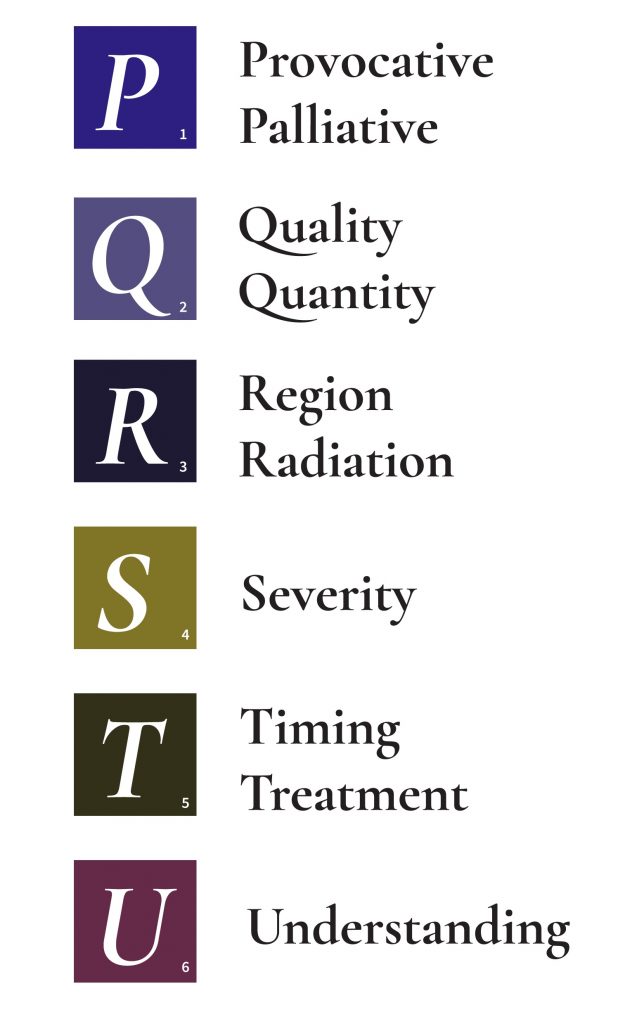 Illustration reference: OpenRN Nursing Skills 2e Ch.2.5.
- Kapag kailangan ang SOAP-style HPI detail, maaaring gamitin ang OLDCARTS (onset, location, duration, characterization, alleviating/aggravating factors, radiation, temporal pattern, severity).
- Obserbahan ang nonverbal cues habang nag-iinterview (halimbawa facial expression, guarding, posture change, affect shift) at i-validate ang kahulugan nito gamit ang follow-up questions.
- Kolektahin ang core history domains: demographics, prior diseases, hospitalizations, surgeries, injuries, childhood illnesses, at major chronic conditions.
- Sa demographic intake, paghiwalayin ang biological sex, gender identity, at preferred pronouns, at kumpirmahin ang preferred spoken language at interpreter need.
- Magtanong ng targeted questions tungkol sa allergies, medications, immunizations, at kasalukuyang health goals; itala ang reaction pattern para sa bawat iniulat na allergen.
- Para sa medications, kolektahin ang prescriptions, over-the-counter products, vitamins, at herbal supplements, at kumpirmahin kung bakit at paano iniinom ng pasyente ang bawat isa.
- Isagawa ang medication reconciliation sa pamamagitan ng paghahambing ng kasalukuyang medication list sa dating documented lists sa bawat hospitalization at clinic visit.
- Kung ang adherence responses ay “no” o “sometimes,” gumamit ng open-ended follow-up upang tukuyin ang barriers bago tapusin ang education plans.
- Gumamit ng open relationship-status prompts (halimbawa, “Tell me about your relationship status”) at iwasan ang assumption-based wording.
- Magtanong tungkol sa resuscitation preferences at kung may nakafila nang advance directives (halimbawa living will o health-care POA).
- Mag-alok ng advance-directive information resources kapag iniulat ng pasyente na walang dokumentong nakafile o humihingi ng paglilinaw.
- Kunin ang detalye para sa chronic illnesses (timing ng diagnosis, kasalukuyang treatment, specialist involvement, functional effect, coping, at complications/disability kung mayroon).
- Kunin ang history ng acute illnesses, surgeries, accidents, o injuries at anumang kaugnay na komplikasyon, at isama ang reproductive history kapag clinically relevant.
- Kunin ang family disease history at relevant social/environmental exposures (halimbawa tobacco, alcohol, drug use, stress/life context).
- Sa adolescent-focused o developmentally sensitive interviews, maaaring i-structure ng HEADSS ang social history domains (Home/Environment, Education-Employment-Eating, Activities, Drugs, Sexuality, Suicide/Depression).
- Tayahin ang coping resources, reliability ng support network, at spiritual/cultural preferences na maaaring makaapekto sa treatment acceptance o care goals.
- Linawin kung ang key concerns ay current symptoms (actual problems) o risk indicators (potential problems) na nangangailangan ng preventive follow-up.
- Kumpletuhin ang review of systems upang makuha ang subjective findings na hindi direktang naoobserbahan at matukoy ang mga sintomas na maaaring hindi itinuring ng pasyente na mahalaga.
- Gumamit ng clarifying follow-up questions upang maresolba ang ambiguities at timeline gaps.
- I-validate ang preexisting chart data kasama ang pasyente at itama o dagdagan ang impormasyon kung kailangan.
- Panatilihin ang empathetic, conversational communication style sa buong panayam.
- Habang kumukuha ng history data, ipagpatuloy ang concurrent general-survey observation para sa immediate stability o distress cues.
- Idokumento agad ang findings at ipabatid sa care team ang urgent risk findings.
- Palakasin ang patient-centered interviewing sa pamamagitan ng pagtrato sa pasyente bilang pangunahing source ng impormasyon hangga’t maaari.
- Para sa functional-health review, gumamit ng malinaw na opener (halimbawa, “I would like to ask about factors that affect your day-to-day functioning”) at anyayahan ang dagdag na concerns sa buong seksyon.
- I-screen ang relationship at support context, kabilang ang social isolation, kamakailang mahahalagang pagkawala, at kung ligtas ang pakiramdam ng pasyente sa kasalukuyang relationships.
- Gumamit ng sensitive, professional sexuality-reproduction questions na sumasaklaw sa sexual-health concerns at safety sa intimate practices nang walang assumption-based language.
- Gumamit ng nonjudgmental substance-use questioning at ihiwalay ang use sa abuse sa pamamagitan ng pagtatasa ng frequency, dependence cues, at disruption ng work/relationships/housing.
- Isama ang open-ended value-belief/spirituality prompts kung relevant sa care decisions (halimbawa, “Can you share spiritual or religious practices that are important during your stay?”).
- Sa self-perception review, magtanong tungkol sa identity, body-image/function changes, mood-state shifts, at coping sa bandang dulo ng panayam pagkatapos mabuo ang baseline rapport.
- Ituring ang violence/trauma disclosures, suicidal thinking, at unsafe-environment cues bilang immediate safety priorities: sundin ang agency emergency workflow, tuparin ang mandated reporting para sa pinaghihinalaang child/elder abuse, at kung mataas ang suicide risk (halimbawa specific plan at near-term intent, lalo na sa loob ng 48 oras), huwag iwanang mag-isa ang pasyente habang inaayos ang emergent care.
- Isama ang environmental-health screening (kaligtasan ng tahanan/neighborhood, violence exposure, transportation, affordability ng food/medication, at iba pang social-determinant barriers) kapag tinatasa ang health-perception at self-management capacity.
- I-integrate ang review-of-systems questions sa katumbas na body-system exam flow kung posible (halimbawa pagtatanong ng bowel-pattern questions habang abdominal assessment) upang mapabuti ang efficiency at symptom-context accuracy.
- Bago simulan ang interview questions, magsagawa ng hand hygiene, tingnan kung may mga transmission-based precautions, at tugunan ang immediate readiness needs (halimbawa pain, toileting, salamin/hearing aids) upang masuportahan ang tumpak na pakikilahok.
- Pag-alis sa kuwarto, kumpletuhin ang safety sweep (call light abot-kamay, bed low/locked, side rails secured kung naaangkop, table abot-kamay, at natanggal ang fall hazards) at i-report ang urgent concerns ayon sa policy.
- Sa acute exacerbation admissions ng chronic disease, magdagdag ng focused questions sa kasalukuyang self-management knowledge, home-treatment routine, at available interdisciplinary/community supports upang maagang matukoy ang preventable discharge-risk gaps.
Note
Madalas na sabay-sabay, hindi mahigpit na sunod-sunod, ang data collection, validation, at documentation sa live assessment encounter.
Documentation Essentials
- Isama ang key demographic fields na ginagamit sa clinical at administrative decisions (halimbawa preferred pronouns, religion, allergy status, resuscitation status, at responsible payer/contact details).
- Sa demographic documentation, panatilihing magkahiwalay na data elements ang biological sex, gender identity, at preferred pronouns.
- Isama ang emergency-contact name, relationship, at callback number bilang bahagi ng initial intake reliability/safety planning.
- Kuhanin ang chief complaint gamit ang open-ended prompts at iwasan ang leading questions na nagsusuhestiyon ng sagot.
- Para sa symptom localization, ipaturo sa pasyente ang apektadong bahagi kapag hindi malinaw ang verbal region description.
- Itala ang bawat iniulat na allergy kasama ang specific reaction, hindi lang ang allergen name.
- Magtanong nang partikular tungkol sa nonprescription medications, herbal products, vitamins, at iba pang nonregulated substances.
- Isagawa at idokumento ang medication reconciliation laban sa mga dating list sa bawat hospitalization at clinic visit.
- Kung iniulat ng pasyente ang nonadherence (“no” o “sometimes”), idokumento ang open-ended barrier exploration bago isara ang plano.
- Kung language-discordant ang pasyente, idokumento ang interpreter offer/use at iwasan ang assumption na sapat ang basic conversational English para sa clinical consent/history detail.
- Isama ang social-history questions (halimbawa tobacco, alcohol, sexual health, activity, diet, safety risks) upang matukoy ang health-promotion opportunities.
- Idokumento ang immediate blood-relative family history (halimbawa parents, grandparents, siblings), kabilang ang major disease patterns at kasalukuyang edad o edad/sanhi ng kamatayan kapag alam.
- Idokumento ang chronic-condition timeline, specialist follow-up, current treatment approach, coping impact, at prior complications kapag available.
- Idokumento ang limits ng coping resources/support system at spiritual/cultural care preferences kapag nakaaapekto ang mga ito sa care planning.
- Gumamit ng non-assumptive relationship-status wording at idokumento ang sariling mga termino ng pasyente.
- Idokumento ang resuscitation-preference discussion, kung may advance directives na nakafile, at kung nag-alok ng education/resources.
- Idokumento ang nonjudgmental substance-use assessment na may paghiwalay sa use at abuse, kabilang ang functional impact at readiness to change kapag naibunyag.
- Idokumento ang violence/trauma screening findings, immediate danger actions, at mandated-reporting steps kapag may pinaghihinalaang child o elder abuse.
- Para sa suicide-risk positives, idokumento ang follow-up questions sa current ideation, plan specificity, means access, at near-term timing (kabilang kung may planong self-harm sa loob ng 48 oras), pagkatapos ay itala ang observation/escalation actions.
- Idokumento ang environmental-health safety findings bilang SDOH data (halimbawa hindi ligtas na housing/neighborhood conditions, transit/access limits, at basic-needs barriers).
- Kapag integrated ang ROS prompts sa physical-exam workflow, idokumento ang linked subjective report sa katumbas na body-system section.
- Kung ipinagpaliban ang interview flow dahil sa acute distress (halimbawa chest pain o hirap huminga), idokumento ang defer reason, emergency escalation actions, at restart timing/plan.
- Ihiwalay ang documented concerns bilang current manifestations laban sa future risk indicators kapag nagpa-prioritize ng follow-up.
- Kung mukhang hindi tugma ang responses (halimbawa mataas na severity score ngunit “tolerable” ang paglalarawan), ipagpatuloy ang focused follow-up upang matukoy ang context gaya ng rest-versus-activity variation.
- Idokumento ang makabuluhang nonverbal cues at kung tumutugma o salungat ang mga ito sa patient-reported symptoms.
- Sa ROS documentation, itala kung present o absent ang bawat system finding gamit ang language ng site policy (halimbawa positive/negative, +/-, o unremarkable).
- Kapag iniulat ang allergy history, idokumento ang symptom details na nagkakaiba ng malamang na adverse effects sa probable true allergy patterns.
- Para sa chronic-disease exacerbation admissions, idokumento ang patient-reported self-management knowledge gaps, kasalukuyang home-management resources, at interdisciplinary-support availability na maaaring makaapekto sa post-discharge safety.
- Kung mula sa secondary source ang impormasyon, idokumento kung sino ang nagbigay nito.
- Kung hindi makapagbigay ng reliable history ang pasyente, idokumento ang collateral sources na ginamit (halimbawa family/caregiver interview, medication lists, prior records, o advance-directive documents).
- Kapag nagcha-chart sa EHR habang nag-iinterview, idokumento ang paggamit ng patient-centered communication behaviors (halimbawa maikling paliwanag habang nagcha-chart at pagbabalik sa eye-level engagement).
- Gumamit ng agency-specific history forms para sa standard fields at ilagay sa associated progress note ang dagdag na clinically relevant details na hindi saklaw ng form.
Karaniwang Pagkakamali
- Pagtitiwala lamang sa closed questions → hindi kumpletong symptom at context data.
- Paglaktaw sa social/environmental history → hindi natukoy ang modifiable risk factors.
- Hindi pagtingin sa language/cognitive barriers → hindi tumpak na history at hindi ligtas na planning.
- Naantalang documentation → pagkawala ng detalye at handoff gaps.
Related
- therapeutic communication - Direktang nakaaapekto ang communication style sa interview trust at data quality.
- respiratory failure - Maaaring matukoy ng focused history ang high-risk symptom patterns na nangangailangan ng urgent escalation.
- general survey at anthropometric measurement sa initial assessment - Kasabay na nangyayari ang health-history interview at general-survey observation sa maagang assessment.