Irritable Bowel Syndrome
Mahahalagang Punto
- Ang IBS ay chronic functional GI disorder: present ang mga sintomas kahit walang structural GI disease na nagpapaliwanag sa mga ito.
- Nakaaapekto ang IBS sa humigit-kumulang 10% hanggang 15% ng mga tao sa United States at madalas na outpatient GI diagnosis.
- Ang core presentation ay recurrent abdominal discomfort/pain na may altered bowel pattern (constipation, diarrhea, o mixed pattern).
- Ginagabayan ng Rome IV clinical criteria ang diagnosis; walang iisang confirmatory diagnostic test.
- Individualized ang management gamit ang lifestyle trigger control, stress reduction, at symptom-pattern-based pharmacology.
Patopisyolohiya
Pinaniniwalaang kinasasangkutan ng IBS ang dysregulated bowel motility at gut-brain signaling. Ang increased intestinal contractions ay maaaring magdulot ng diarrhea-predominant symptoms, habang ang reduced o mahihinang contractions ay maaaring magdulot ng constipation-predominant symptoms.
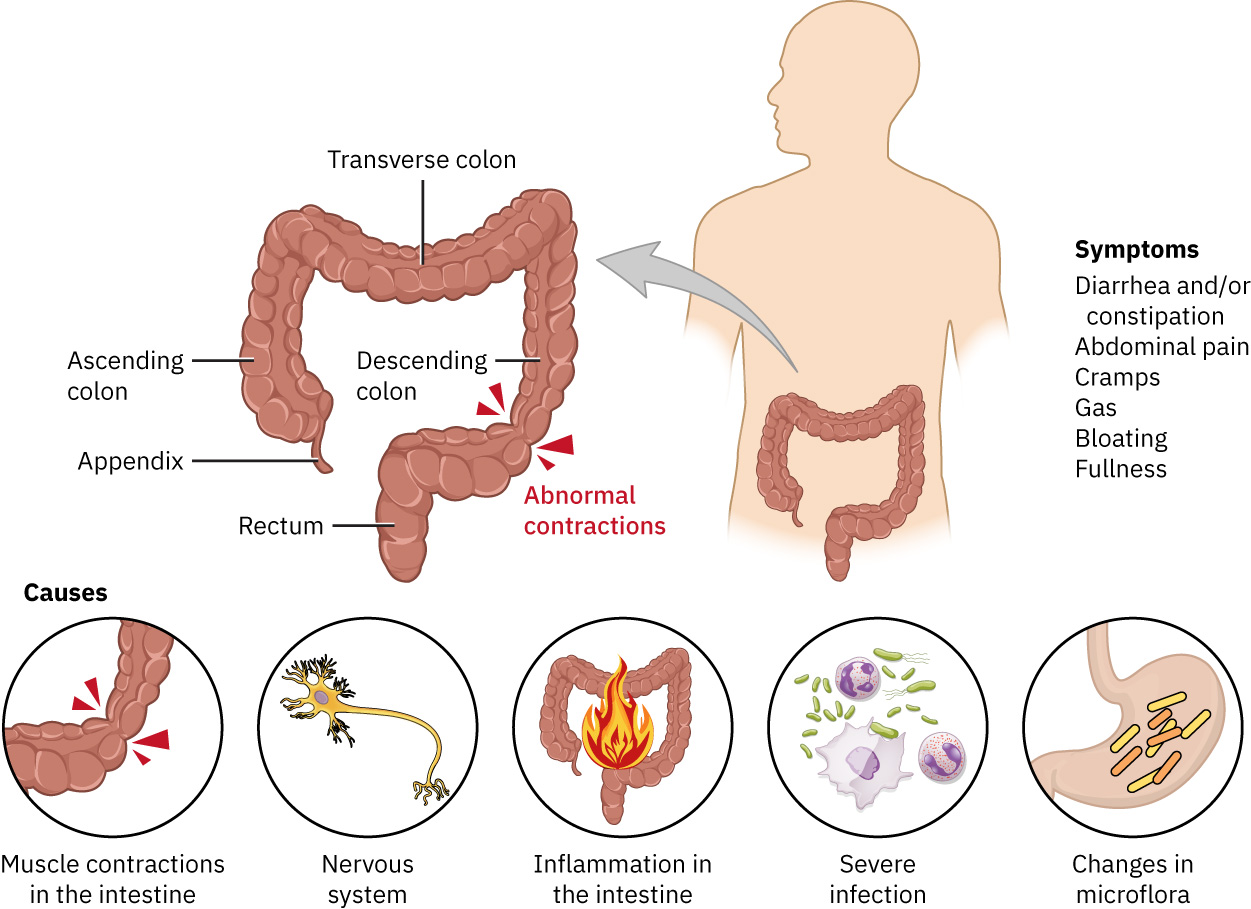 Illustration reference: OpenStax Medical-Surgical Nursing Ch.19.5.
Kabilang sa mga iminungkahing contributing mechanisms ang altered intestinal microbiota, immune-response changes, at environmental stressors gaya ng early-life stress, prior antibiotic exposure, postinfectious changes pagkatapos ng gastroenteritis, at food intolerance patterns.
Classification
- IBS-C: Constipation-predominant stool pattern.
- IBS-D: Diarrhea-predominant stool pattern.
- IBS-M: Mixed/alternating constipation at diarrhea pattern.
Pagtatasa sa Nursing
Pokus sa NCLEX
Ihiwalay ang functional IBS patterns mula sa red-flag findings na nangangailangan ng evaluation para sa ibang GI disease.
- Tayahin ang abdominal pain pattern, bowel frequency/consistency, bloating, at trigger-food association.
- Linawin kung tumitindi ang pain kapag nagbabago ang bowel habits at gumagaling pagkatapos ng bowel movements, na sumusuporta sa IBS symptom pattern.
- Ilapat ang clinical symptom criteria (Rome IV): recurrent abdominal pain nang hindi bababa sa 1 araw/linggo sa loob ng 3 buwan na nauugnay sa bowel-movement improvement, altered stool frequency, at/o altered stool form.
- Mag-screen ng psychosocial contributors gaya ng stress, anxiety, at depression burden.
- I-monitor ang hydration at nutrition status kapag may diarrhea o poor intake.
- Magtanong tungkol sa history ng mucus sa dumi at stool amount/frequency trends upang mapino ang subtype pattern at trigger review.
- I-escalate para sa alarm features (halimbawa iron-deficiency pattern, hematochezia, unintentional weight loss, o malakas na cancer/IBD family history) na nangangailangan ng karagdagang workup.
Diagnostics:
- Walang iisang diagnostic test na nagkukumpirma ng IBS.
- Kung walang alarm findings, madalas minimizado ang diagnostic testing; ginagamit nang pili ang CBC/CMP at stool testing upang i-rule out ang alternatibong causes kapag may concerning cues.
- Maaaring kailanganin ang colonoscopy sa selected patients (halimbawa concerning history o risk profile).
- Maaaring gamitin ang serum studies upang i-exclude ang infection o ibang disease kapag atypical o persistent ang sintomas.
Mga Interbensyon sa Nursing
- Gabayan ang individualized lifestyle changes: dagdagan ang activity at bawasan ang trigger foods.
- Gumamit ng food at symptom diaries upang matukoy ang personal intolerance patterns at stool trends.
- Palakasin ang stress-management strategies (halimbawa breathing exercises at meditation) upang mabawasan ang flare intensity.
- I-coordinate ang referrals sa gastroenterology at dietetics para sa individualized long-term plans.
- I-track ang stool pattern at response sa therapy sa subtype-specific care (IBS-C vs IBS-D vs IBS-M).
- Pigilan ang dehydration sa diarrhea-predominant episodes gamit ang oral o IV rehydration kapag indicated.
- I-monitor ang escalation cues (halimbawa fever, lethargy, tachycardia, o lumalalang anxiety habang umuusad ang symptoms) at i-coordinate ang agarang provider reassessment.
- Suriin ang outcomes gamit ang patient-reported symptom burden, fluid-balance stability, at nabawasang pag-asa sa pain medication kapag gumaganda ang sintomas.
Functional Diagnosis, Totoong Sintomas
Functional ang IBS sa halip na structural, ngunit maaaring malaki at chronic ang symptom burden. Iwasang balewalain ang sintomas; ituon sa symptom relief at quality-of-life outcomes habang nagsi-screen para sa red flags.
Pharmacology
| Symptom Pattern | Drug Class | Examples | Key Nursing Considerations |
|---|---|---|---|
| IBS-C | laxatives(mga laxative) and fiber support | Psyllium, osmotic/stimulant laxatives (as ordered) | I-titrate ayon sa stool response; i-monitor ang bloating at cramping. |
| IBS-D | antidiarrheals(mga antidiarrheal) +/- probiotics | Loperamide; selected probiotic strategies | Kumpirmahin ang kawalan ng infectious red flags bago ang routine antidiarrheal use. |
| Severe global symptoms | antidepressants(mga antidepressant) | Low-dose TCAs or SSRIs | Maaaring mabawasan ang pain at bowel symptom burden; i-monitor ang adverse effects at mood status. |
| Selected IBS-D cases | Serotonin-modulating and gut-directed agents | Alosetron (women with IBS-D), rifaximin | Ireserba para sa specific indications; i-monitor nang mabuti ang response at adverse effects. |
Paglalapat ng Clinical Judgment
Klinikal na Sitwasyon
Isang 34-anyos na pasyente ang nag-uulat ng recurrent crampy abdominal pain at salit-salitang constipation/diarrhea sa loob ng ilang buwan, na lumalala kapag mataas ang stress, na walang bleeding o weight loss.
- Recognize Cues: Chronic recurrent pain, mixed stool pattern, stress linkage, walang alarm bleeding/weight loss.
- Analyze Cues: Ang pattern ay tugma sa posibleng IBS-M sa halip na acute infection o overt inflammatory disease.
- Prioritize Hypotheses: Prayoridad ang symptom control kasama ang trigger identification at hydration/nutrition protection.
- Generate Solutions: Simulan ang food/stool diary, ituro ang stress-management tools, at iayon ang subtype-specific symptom medication plan.
- Take Action: Ipatupad ang education, i-monitor ang stool/pain trends, at i-coordinate ang GI/dietitian follow-up.
- Evaluate Outcomes: Mas mababang pain scores, mas maayos na stool regularity, at mas kaunting activity-limiting flares.
Mga Kaugnay na Konsepto
- constipation - Constipation-focused assessment at staged bowel-regimen interventions.
- pagtatasa at pamamahala ng diarrhea - Diarrhea-focused hydration, infection, at skin-protection priorities.
- mga antidiarrheal - Drug-class safety at contraindication profile para sa diarrhea episodes.
- mga laxative - Pharmacologic support options para sa constipation-predominant symptoms.
- inflammatory bowel disease - Mahalagang inflammatory differential kapag may alarm features.
- stress at anxiety - Stress-load assessment at nonpharmacologic coping strategies.
Sariling Pagsusuri
- Aling symptom features ang sumusuporta sa IBS diagnosis sa ilalim ng Rome IV criteria?
- Aling alarm findings ang dapat mag-udyok ng workup para sa mga diagnosis na iba sa IBS?
- Paano naiiba ang paggamot sa pagitan ng IBS-C at IBS-D patterns?