Arterial Blood Gas (ABG)
| Test | Normal Range | Critical Values |
|---|---|---|
| pH | 7.35-7.45 | <7.25 or >7.60 |
| PaO2 | 80-100 mm Hg | <60 mm Hg |
| PaCO2 | 35-45 mm Hg | <25 mm Hg or >60 mm Hg |
| HCO3- | 22-26 mEq/L | <10 mEq/L or >40 mEq/L |
| Base excess/deficit | -2 to +2 mEq/L | Persistent base deficit suggests metabolic acidosis burden |
| SaO2 | 95-98% | <88% |
Kahalagahang Klinikal
NCLEX Pattern
Karaniwang sinusubok sa ABG questions ang mabilis na pagkilala kung aling value ang labas sa range, kung respiratory o metabolic ang disorder, at kung aling finding ang nangangailangan ng agarang escalation.
Karaniwang ino-order ang ABG kapag may respiratory distress at kailangang mabilis na malinawan nang objective ang oxygenation/ventilation status.
High-Risk Acidemia
Ang pH na malapit sa 7.10 ay maaaring agad na makamatay at nangangailangan ng urgent escalation at cause-directed treatment.
Madalas na mas tumpak na oxygenation indicator ang PaO2 kaysa SaO2 kapag hindi stable ang respiratory status.
Mabilis na Mga Hakbang sa Interpretasyon
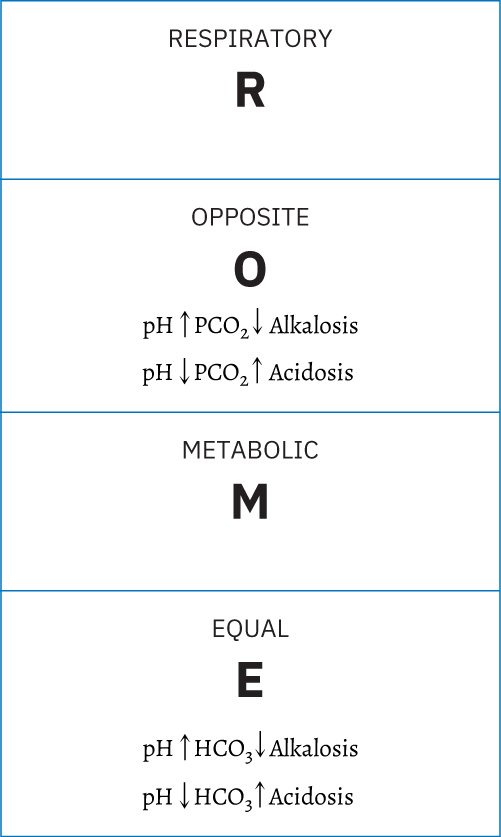 Illustration reference: OpenStax Fundamentals of Nursing Ch.20.2.
- Tukuyin kung acidemia o alkalemia mula sa pH.
- Suriin ang PaCO2 para i-evaluate ang respiratory direction (
ROME: respiratory opposite pH). - Suriin ang HCO3- para i-evaluate ang metabolic direction (
METabolic EqualpH direction). - I-classify ang compensation: uncompensated, partially compensated, o fully compensated gamit ang pH recovery at PaCO2/HCO3 trends.
Elevated PaCO2
- Ipinapahiwatig: respiratory-acidosis, carbon dioxide retention na may kaugnayan sa hypoventilation
- Nursing action: i-assess ang respiratory rate at work of breathing, i-notify ang provider, at suportahan ang ventilation strategy
Decreased PaCO2
- Ipinapahiwatig: respiratory-alkalosis, sobrang ventilation na may carbon dioxide loss
- Nursing action: i-evaluate ang sanhi ng hyperventilation at i-reassess ang serial blood gases
Elevated HCO3-
- Ipinapahiwatig: metabolic-alkalosis
- Nursing action: i-review ang fluid status at mga sanhi ng hydrogen ion loss, pagkatapos ay i-trend ang follow-up chemistry at ABG values
Decreased HCO3-
- Ipinapahiwatig: metabolic-acidosis
- Nursing action: i-assess ang renal function at perfusion, pagkatapos ay i-monitor ang trend response sa treatment
Mga Kaugnay na Lab
- basic-metabolic-panel - Nagbibigay ng bicarbonate at iba pang electrolyte context para sa ABG interpretation.
- serum-potassium - Kadalasang may kasamang potassium shifts ang acid-base disturbances.
- serum-sodium - Ang sodium at water balance ay maaaring makaapekto sa kabuuang fluid at acid-base status.